Source modern bear night light for Home, Party, and Gift Use
Compare 30 listings of modern bear night light options featuring varied power sources, materials like acrylic and silicone, and customization availability. Buyers can evaluate specifications including certifications, packing sizes, and suitable applications for indoor or outdoor use.
Key considerations
Products List


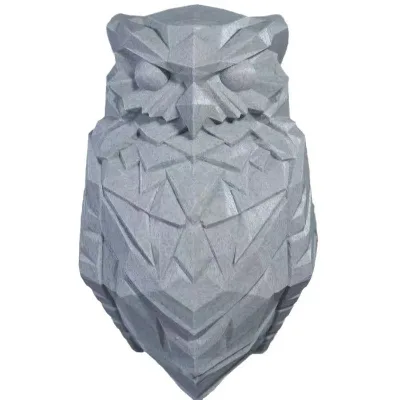


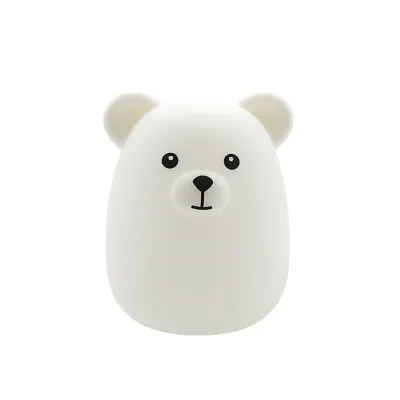


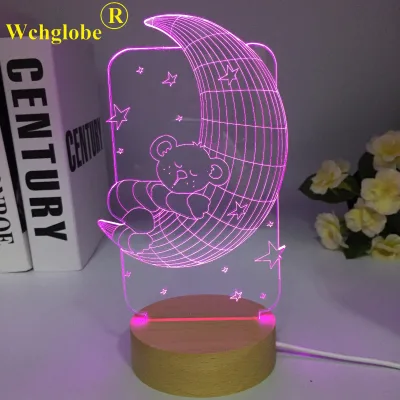
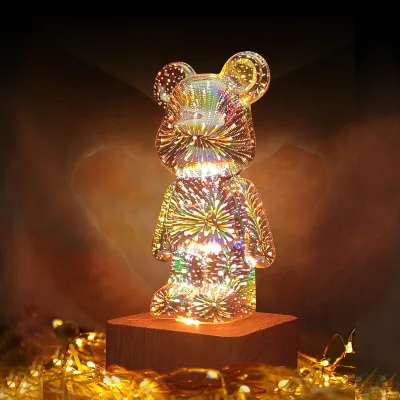

Comprehensive Sourcing Guide
Strategic Sourcing Guide for Modern Bear Night Lights
Understanding Product Definitions and Core Attributes
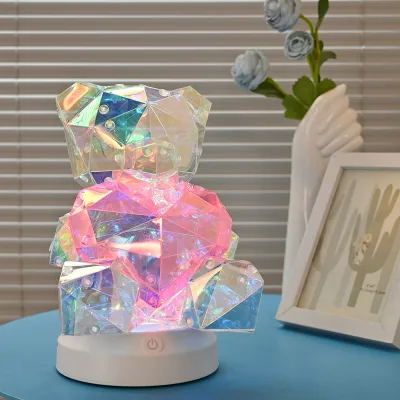
When sourcing a modern bear night light, buyers must first distinguish between the specific product categories observed in the current market. The term "modern bear night light" often conflates distinct product types, ranging from decorative string lights to standalone LED bulbs and interactive toys. Based on available market data, the product landscape includes items explicitly labeled with "Light Source: String Light" and others defined as "With Light Source" or "LED Lights." A critical observation is the variation in material composition; some units are constructed from "Pet+LED" combinations, while others utilize "Acrylic," "Silicone," or standard "Plastic."
The form factor is equally diverse. While some products feature a "Bulb" shape or "Acrylic" geometric designs, others are styled as "Cartoon" figures or "Funny Toys" with a "Medium" scale suitable for children over eight years of age. The power source is a primary differentiator; the market offers units powered by "Electric" connections, "USB" interfaces, or "Battery" operation. This distinction dictates the intended application environment. For instance, "USB Style" and "Electric" powered units are typically designed for indoor use, whereas "Battery" powered options with "Multicolour" capabilities may be marketed for "Indoor,Outdoor" versatility. Buyers must verify the specific "Light Source" and "Power Source" attributes of any listing to ensure alignment with the intended use case, whether it is a bedside companion or a festive decoration.
Technical Specifications and Functional Variations
Technical specifications for modern bear night lights vary significantly based on the manufacturer's design intent. The physical dimensions are not standardized; observed packing sizes and product standards range widely, including specific measurements such as "11.51513.5cm," "1666.4cm," and "9.5 x 6 x 2.2 inches." Some listings indicate a generic "Different size Available" standard, while others provide precise packaging dimensions like "20X20X30 cm" or "8812."
Power consumption is another critical technical parameter. Data indicates that many units operate with a power rating of "≤5W," which is essential for energy efficiency and heat management, particularly in enclosed spaces. The lighting modes also differ; some products offer "Touch Style," "Color Style," "Button Style," and "USB Style" operation. This suggests a range of user interfaces from simple on/off switches to more complex touch-sensitive controls. Furthermore, the "Appearance" of these lights often supports "Custom Patterns/Styling," allowing for personalization. The "Color" attribute ranges from specific single tones like "White" to "Multicolour" options, which are frequently associated with "Christmas Lights" or "Carnival" applications. Buyers should verify the exact "Mode" and "Color" capabilities against their specific functional requirements, as a "Funny Toys" application may require different lighting dynamics than a "Baby Shower" or "Wedding" setting.
Compliance, Certification, and Safety Standards
Safety and regulatory compliance are paramount when sourcing lighting products, especially those intended for children or residential use. The market data reveals a complex landscape of certifications. Some products are listed with "CE, RoHS, EMC, LVD" certifications, while others carry "CCC, CE, FCC, RoHS" or "CE, FCC, RoHS." The presence of "FCC" indicates compliance with electromagnetic interference standards, which is crucial for electronic devices. "RoHS" compliance ensures the absence of hazardous substances, and "LVD" (Low Voltage Directive) is a key safety standard for electrical equipment in relevant markets.
However, buyers must exercise caution. The presence of a certification label in a product listing does not guarantee that every unit in a batch is certified. The "High-confidence facts" indicate that certifications vary by product model. For example, the "prod_model: RY-GS18" is associated with specific certifications, while "prod_model: BT-Y-0110-15" may have different compliance profiles. It is the buyer's responsibility to verify that the specific batch being procured carries the necessary "CCC" (China Compulsory Certification) for the Chinese market or "CE/FCC" for international export. Additionally, the "Warranty" period is observed as "1 Year" for certain models, which serves as a baseline for post-purchase support. Buyers should explicitly request valid test reports and certification documents from the supplier before finalizing an order, ensuring that the "prod_origin" of "China" aligns with the required export standards for the destination market.
Cost Drivers and Pricing Dynamics
The pricing structure for modern bear night lights is influenced by several factors, including material composition, customization options, and packaging complexity. The observed listed price range in the market spans from $0.45 to $30.00 USD. This wide disparity reflects the difference between basic "Plastic" or "String Light" units and more sophisticated "Acrylic" or "Silicone" models with advanced features like "Touch Style" controls or custom patterns.
The "MOQ" (Minimum Order Quantity) is another significant cost driver, with observed ranges from 1 to 5000 units. Lower MOQs, such as 1 unit, are typically associated with higher per-unit costs, often catering to small retailers or drop-shippers. Conversely, bulk orders near the 5000-unit mark can leverage economies of scale to reduce the unit price. The "Customization" attribute is available across the market, which inherently adds to the cost. Customizing the "Appearance" with specific patterns or altering the "Shape" requires additional tooling and setup fees. Furthermore, the "prod_packing" method, whether "Brown Carton," "Carton," or "CTN," impacts the final cost, especially if specialized packaging is required for fragile "Acrylic" or "Silicone" components. Buyers should analyze the total landed cost, factoring in the unit price, MOQ requirements, and any additional fees for customization or specialized packaging.
Typical Applications and Market Segmentation
Modern bear night lights serve a diverse array of applications, driven by their aesthetic and functional versatility. The "Application" field in product data lists a broad spectrum of events, including "Anniversary," "New Year," "Baby Shower," "Wedding," "Birthday," "Halloween," "Christmas," "Carnival," and "Luau." This indicates that these products are not limited to a single use case but are marketed as versatile decor items.
The "Style" of the product also dictates its market segment. "Cartoon" and "Funny Toys" styles are clearly targeted at the "Children" demographic, with specific "Age" recommendations such as "> 8 Years." These units often feature "Multicolour" lights and "Battery" power sources, making them suitable for play or as gifts. In contrast, "Acrylic" or "Silicone" models with "Touch Style" controls may be positioned as home decor items for adults or as premium gifts for "Anniversary" or "Wedding" events. The "Lighting Space" requirement of "10cm" suggests that these products are designed for intimate, personal spaces rather than large-scale industrial lighting. Buyers should align their procurement strategy with the specific event or demographic they intend to serve, ensuring the product's "Play Method" and "Appearance" match the expectations of the target audience.
Supplier Evaluation and Quality Control Protocols
Evaluating suppliers for modern bear night lights requires a rigorous approach to quality control and verification. Since the "prod_origin" is consistently listed as "China," buyers must be aware of the potential for variability in manufacturing quality. The "Customization" availability implies that many suppliers operate on a made-to-order basis, which can introduce inconsistencies if not managed correctly.
Quality control should begin with a review of the "Certification" documents. Buyers must verify that the "CE, RoHS, FCC" claims are backed by valid test reports from accredited laboratories. The "Warranty" of "1 Year" should be clearly defined in the contract, specifying what is covered, such as LED failure or battery issues. Additionally, the "prod_packing" method must be inspected to ensure that "Acrylic" or "Silicone" components are protected against damage during transit. Buyers should request pre-shipment inspections to verify that the "Material" (e.g., "Pet+LED," "Plastic," "Acrylic") matches the agreed-upon specifications. It is also crucial to check the "prod_model" consistency; ensuring that the model number on the product matches the model number on the certification documents prevents the receipt of non-compliant goods. Finally, buyers should assess the supplier's ability to handle "Customized" orders, verifying their capacity to maintain quality standards while implementing specific "Custom Patterns/Styling."
Long-Term Procurement and Strategic Considerations
For long-term procurement, buyers must consider the scalability and adaptability of their supply chain. The "Different size Available" standard suggests that suppliers may offer a range of dimensions, but buyers should confirm if these variations are standard or require custom tooling. The "Standard" dimensions observed, such as "11.51513.5cm" or "1666.4cm," should be evaluated for compatibility with existing product lines or retail packaging requirements.
Sustainability is another emerging consideration. The use of "Pet+LED" or "Plastic" materials raises questions about recyclability and environmental impact. Buyers should inquire about the supplier's material sourcing practices and whether they offer eco-friendly alternatives. The "Power Source" variability, from "Electric" to "Battery," also impacts long-term costs and user experience. "Battery" powered units may require ongoing replacement costs, whereas "USB" or "Electric" units offer a more sustainable solution. Furthermore, the "Customization" feature allows for brand differentiation, but buyers must ensure that the "Appearance" and "Style" remain relevant to market trends. Establishing a long-term relationship with a supplier who can consistently deliver on "Certification" compliance and "Quality Control" is essential for maintaining brand reputation and ensuring customer satisfaction in the competitive night light market.
FAQs
What certifications are available for modern bear night lights?
Products typically carry CE, RoHS, FCC, and CCC certifications depending on the model. Buyers must verify specific batch documents as certifications vary by product model and origin.
Can I customize the appearance of modern bear night lights?
Yes, customization is available for patterns and styling on many units. This option allows for personalization but may require additional tooling fees and affect the minimum order quantity.
What power sources do modern bear night lights use?
Options include electric, USB, and battery power sources for different use cases. Electric and USB models suit indoor use, while battery units often support indoor and outdoor applications.
Which materials are used in modern bear night light construction?
Materials vary and include Pet+LED, Acrylic, Silicone, and standard Plastic. The choice of material influences the product style, durability, and suitability for specific applications like children's toys.
What is the typical price range for modern bear night lights?
Listed prices range from 0.45 to 30 USD depending on features and customization. Lower unit costs are often associated with higher minimum order quantities and standard plastic models.
How does the warranty apply to modern bear night lights?
A 1-year warranty is observed for certain models in the market. Buyers should confirm specific coverage terms in the contract to ensure protection against LED or battery failures.